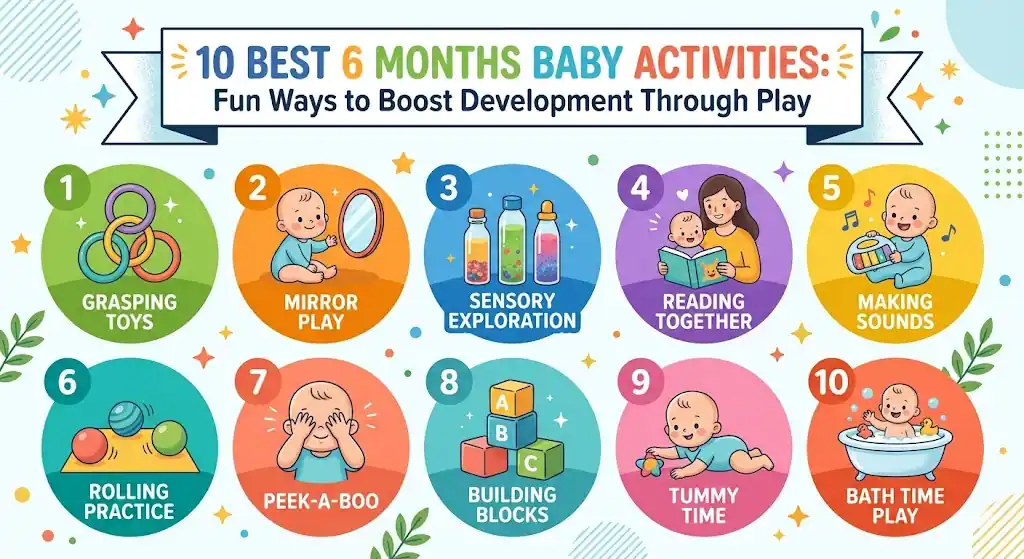

By the time your baby reaches 6 months old, life starts getting a lot more exciting. Your little one is likely rolling over, grabbing toys, laughing at silly faces, and becoming curious about everything around them. As a parent, it’s amazing to watch these milestones unfold—but it can also leave you wondering how to keep your baby entertained throughout the day.
The good news is that babies don’t need fancy toys or expensive gadgets to learn. In fact, some of the best developmental activities use everyday household items and simple interactions. During my years working with babies, I noticed that they were often more fascinated by a crinkly cloth, a mirror, or a parent’s voice than by any high-tech toy.
The activities below are designed to support your baby’s physical, cognitive, sensory, and social development while keeping playtime fun and engaging.
Safety First: Always supervise your baby during activities. Avoid small objects that could pose a choking hazard, ensure toys are age-appropriate, and stop any activity if your baby becomes tired or frustrated.
Why Play Is So Important at 6 Months
At 6 months, babies learn through exploration. Every touch, sound, movement, and interaction helps build new neural connections in the brain. Play isn’t just entertainment—it’s how babies develop important skills such as:
- Hand-eye coordination
- Fine motor skills
- Gross motor development
- Language foundations
- Social and emotional skills
- Problem-solving abilities
Even just a few minutes of focused play throughout the day can make a meaningful difference.
1. Tummy Time Treasure Hunt
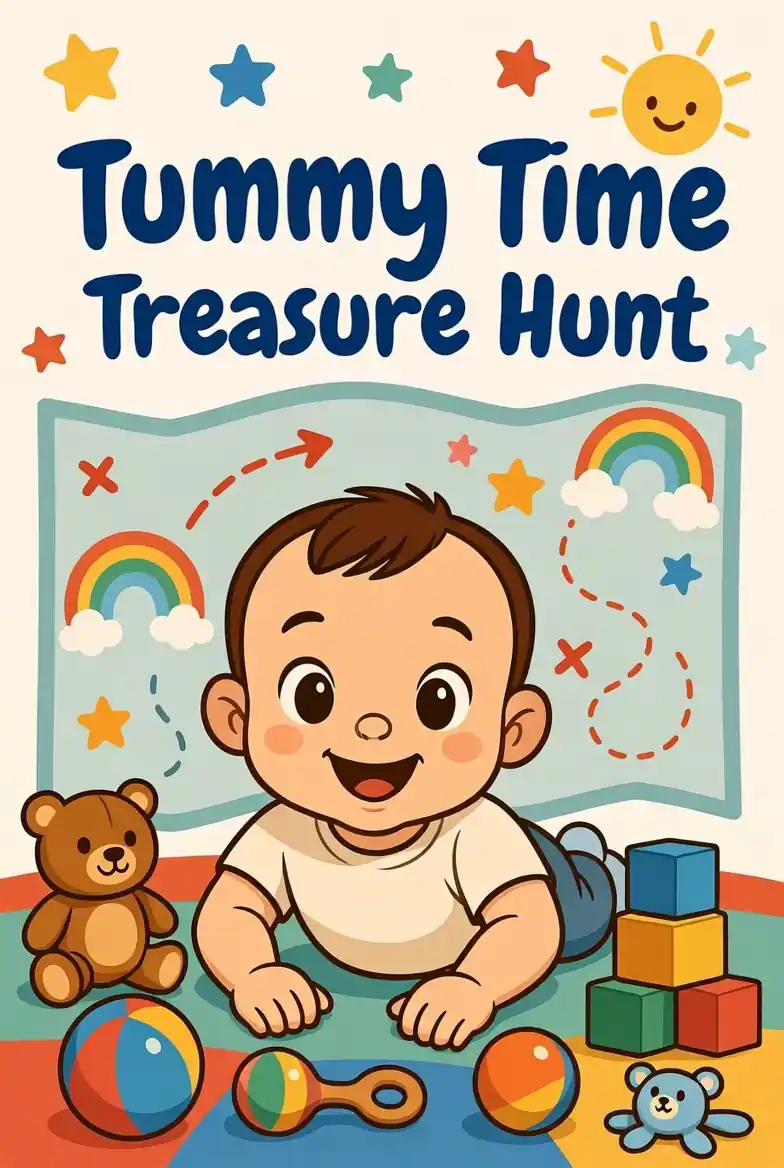
Materials Needed
- Soft blanket or play mat
- Colorful toys
- Baby-safe mirror
How to Do It
- Place your baby on their tummy.
- Arrange toys slightly out of reach.
- Encourage reaching and stretching.
- Move toys occasionally to maintain interest.
What They Are Learning
- Neck and shoulder strength
- Core muscle development
- Hand-eye coordination
- Early problem-solving skills
Parent Tip: If your baby isn’t a fan of tummy time, get down on the floor with them. Your face is often the most motivating “toy” they have.
2. Mirror Play Magic

Materials Needed
- Baby-safe mirror
How to Do It
- Place the mirror where your baby can easily see it.
- Point to their reflection.
- Smile, wave, and make silly expressions.
- Talk about what they see.
What They Are Learning
- Visual tracking
- Social awareness
- Emotional engagement
- Self-recognition foundations
Most babies are absolutely fascinated by mirrors. Expect lots of smiles, squeals, and excited kicking.
3. Sensory Basket Exploration

Materials Needed
- Washcloth
- Silicone spoon
- Textured teether
- Soft toy
- Crinkly fabric
How to Do It
- Place various textured items in a basket.
- Allow your baby to touch and explore each object.
- Describe textures using simple words.
- Let your baby investigate freely.
What They Are Learning
- Sensory processing
- Fine motor development
- Language exposure
- Curiosity and exploration
Don’t be surprised if everything goes straight into your baby’s mouth. That’s completely normal at this stage and one of the ways babies explore the world.
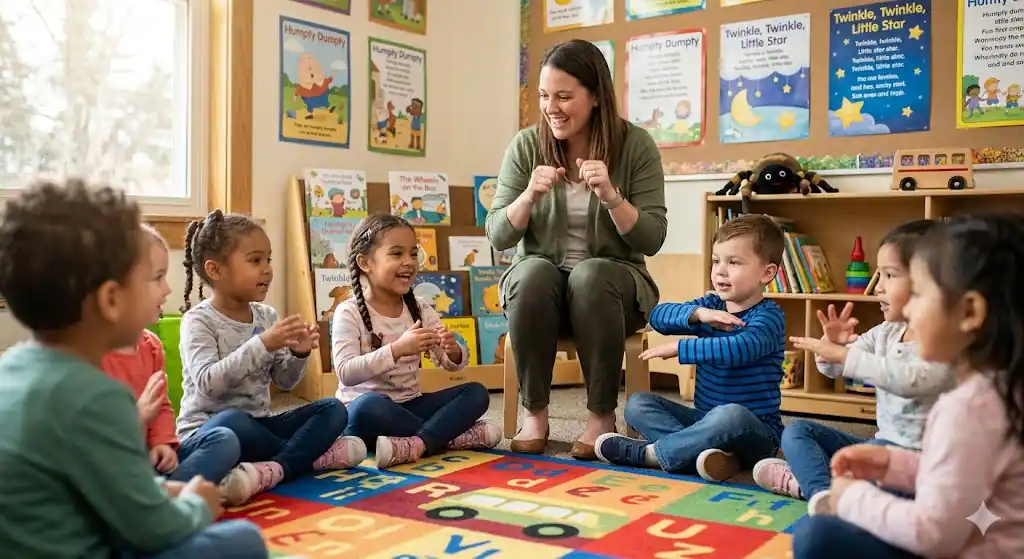
4. Singing and Nursery Rhymes
Materials Needed
- Your voice
How to Do It
- Sing simple nursery rhymes.
- Add hand movements and facial expressions.
- Repeat favourite songs often.
- Pause occasionally to let your baby respond.
What They Are Learning
- Language skills
- Listening abilities
- Memory development
- Social bonding
Your baby doesn’t care whether you can sing perfectly. They simply love hearing your voice.
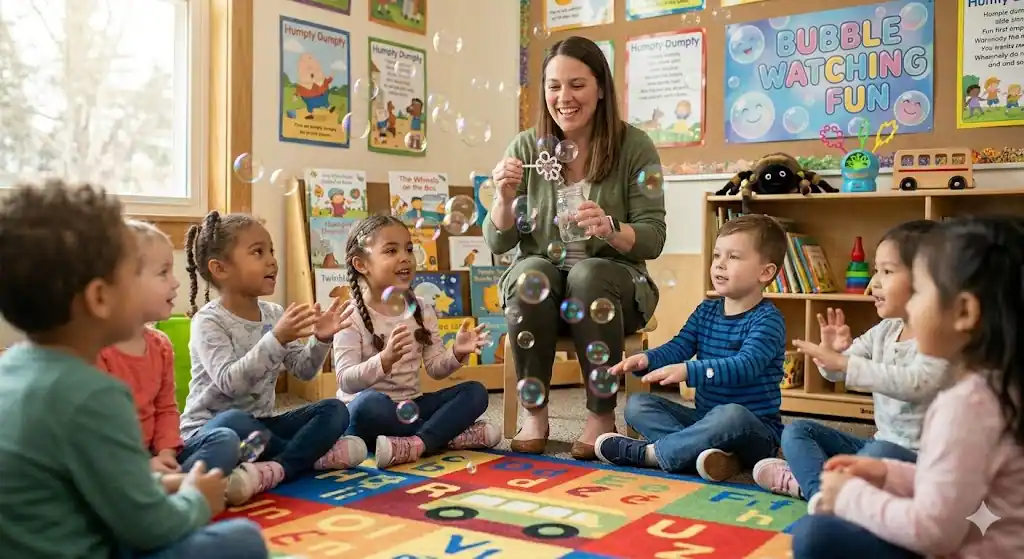
5. Bubble Watching Fun
Materials Needed
- Baby-safe bubbles
How to Do It
- Blow bubbles slowly in front of your baby.
- Encourage them to watch the bubbles float.
- Talk about where the bubbles are going.
- Let them try reaching toward the bubbles.
What They Are Learning
- Visual tracking
- Attention skills
- Eye coordination
- Cause-and-effect understanding
The first time a baby notices floating bubbles is often pure magic.
6. Supported Sitting Play
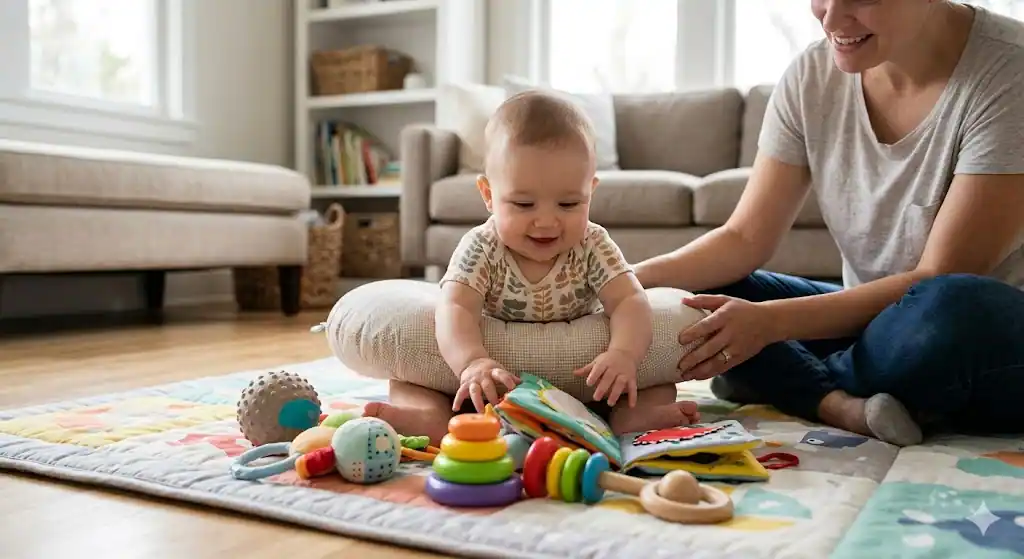
Materials Needed
- Nursing pillow or cushions
- Soft toys
How to Do It
- Support your baby in a sitting position.
- Place toys in front of them.
- Encourage reaching and grabbing.
- Stay close for safety.
What They Are Learning
- Balance
- Core strength
- Coordination
- Body awareness
7. Story Time Together
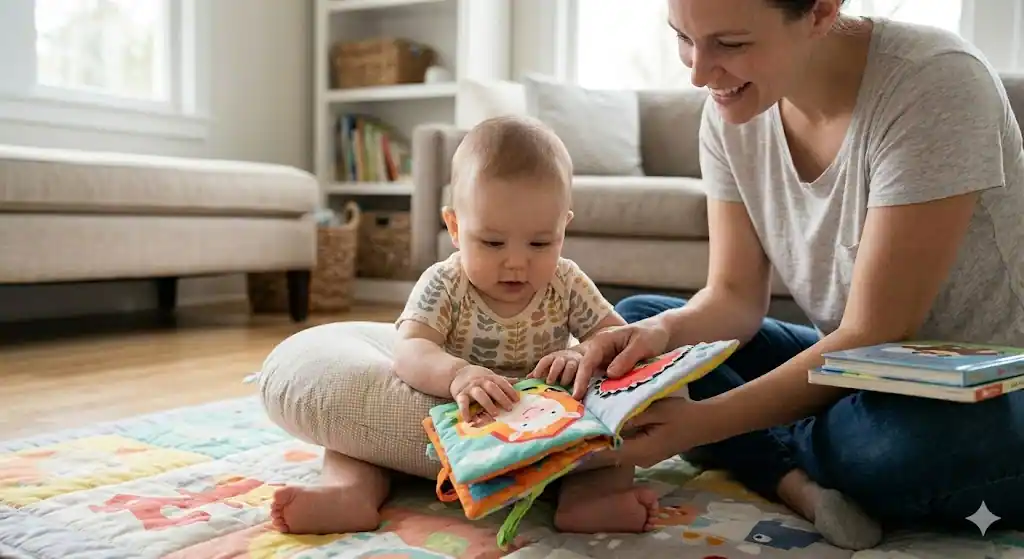
Materials Needed
- Board books
- Cloth books
How to Do It
- Hold your baby comfortably.
- Read slowly and expressively.
- Point to pictures.
- Allow your baby to touch the pages.
What They Are Learning
- Vocabulary foundations
- Listening skills
- Visual recognition
- Parent-child bonding
Even if your baby seems more interested in chewing the book than reading it, they’re still learning.
8. Reach and Grab Challenge
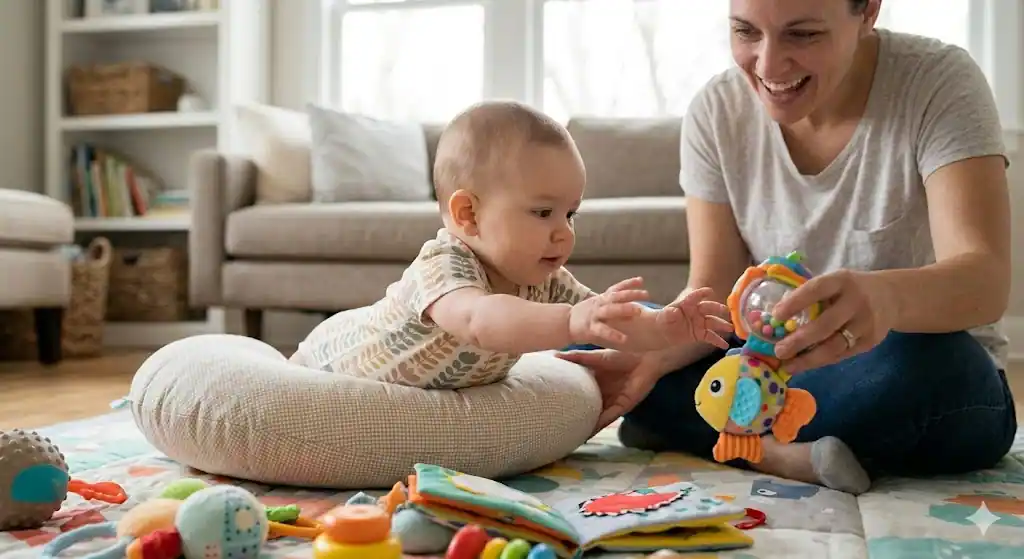
Materials Needed
- Rattles
- Soft toys
How to Do It
- Hold a toy slightly out of reach.
- Encourage your baby to grab it.
- Celebrate every success.
- Repeat with different toys.
What They Are Learning
- Fine motor control
- Hand-eye coordination
- Muscle strength
- Confidence
9. Peek-a-Boo Play
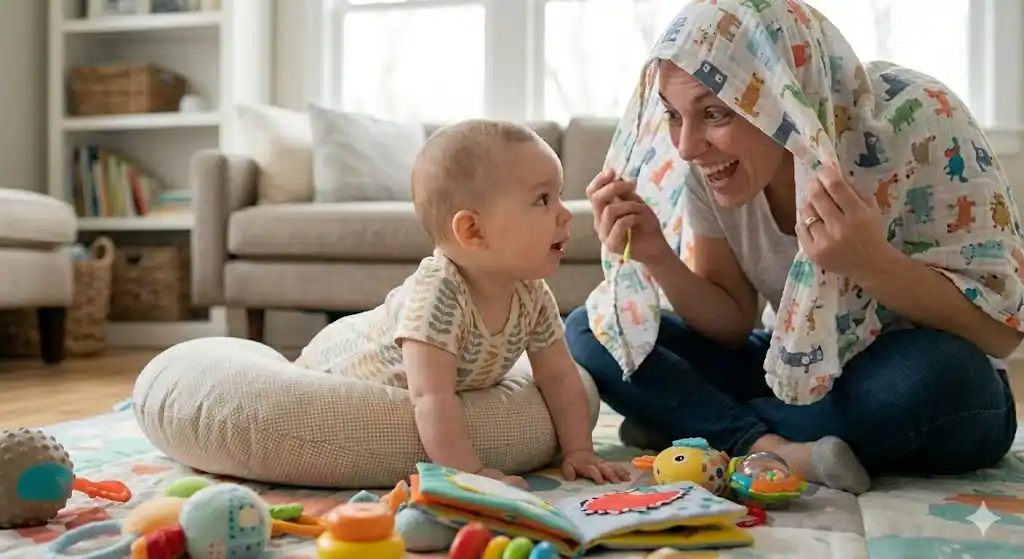
Materials Needed
- Small blanket
How to Do It
- Hide your face behind the blanket.
- Reveal yourself with a smile.
- Repeat several times.
- Let your baby pull the blanket away.
What They Are Learning
- Object permanence
- Memory development
- Social interaction
- Emotional security
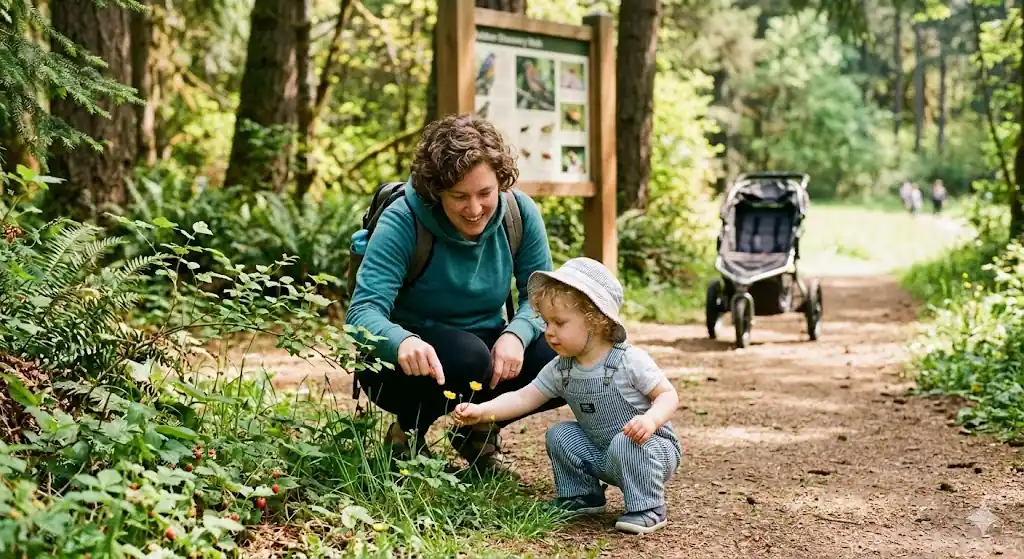
10. Outdoor Discovery Walk
Materials Needed
- Stroller or baby carrier
How to Do It
- Take a slow walk outside.
- Point out birds, trees, flowers, and cars.
- Describe what you see.
- Let your baby observe the environment.
What They Are Learning
- Sensory awareness
- Language development
- Environmental learning
- Visual stimulation
Fresh air and new sights can be incredibly stimulating for babies and refreshing for parents too.
How to Know If Your Baby Is Enjoying an Activity
- Smiling and laughing
- Babbling or cooing
- Focused attention
- Reaching toward objects
- Excited arm and leg movements
If your baby becomes fussy, turns away, or rubs their eyes, they may simply need a break.
Everyday Play Builds a Strong Foundation
You don’t need to entertain your baby every minute of the day. A few meaningful moments of play can support healthy development and strengthen your bond. Remember, your voice, attention, and interaction are some of the most powerful learning tools your baby has.
Enjoy these precious months. The simple games you play today are helping build the skills your little one will use for years to come.
Frequently Asked Questions
What activities should a 6-month-old baby be doing?
Tummy time, sensory play, reading books, singing songs, mirror play, reaching games, and outdoor walks are excellent activities for supporting development.
How long should a 6-month-old play each day?
Most babies benefit from several short play sessions throughout the day rather than one long session.
Can a 6-month-old learn through play?
Absolutely. Play is one of the primary ways babies learn motor skills, language, social interaction, and problem-solving.
What toys are best for a 6-month-old?
Baby-safe mirrors, rattles, textured teethers, cloth books, board books, and soft sensory toys are excellent choices.
